

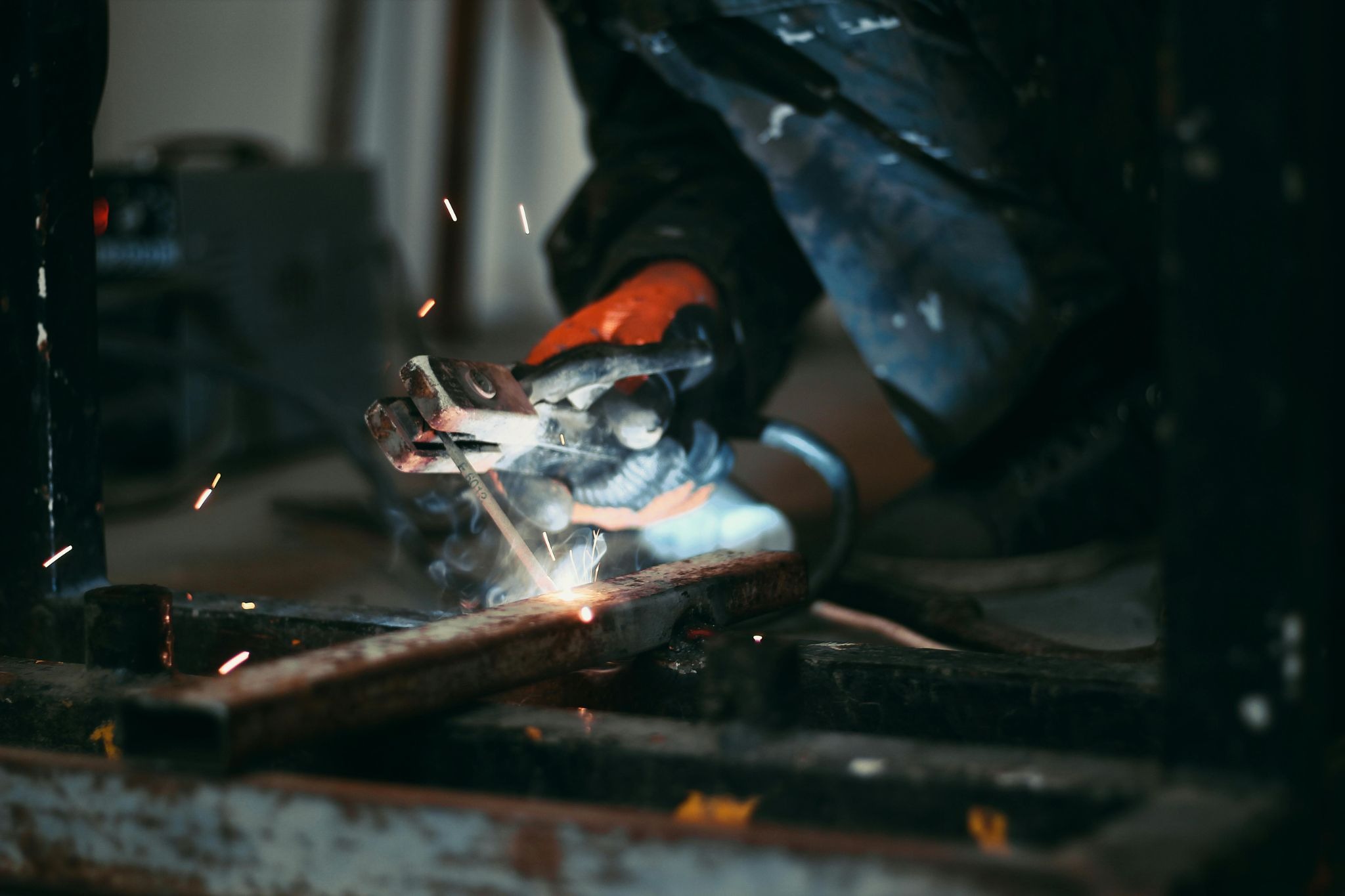
Understanding what is preheating in welding is essential for achieving strong, defect-free welds in industrial fabrication. Preheating helps control cooling rates, reduce cracking risks, and improve weld integrity across different metals.
This guide explains its purpose, ideal temperature ranges, benefits, and real-world applications. You will also learn how Axiom HT delivers professional onsite heat treatment services that support safe, reliable, and high-performance welding outcomes in demanding industries.
Preheating in welding refers to heating a metal workpiece before welding begins. The process raises the temperature of the base material above room temperature to create better welding conditions. This can be applied locally around a joint or across the full component depending on size, thickness, and welding requirements.
It is widely used in industrial environments where materials must withstand stress, pressure, or extreme operating conditions. Preheating ensures that the metal responds more evenly during welding, reducing the risk of structural issues.
Welding creates intense heat in a localized area. When cold metal is suddenly exposed to this heat, it expands quickly and then cools rapidly. This uneven temperature change can lead to internal stress and cracking.
Preheating solves this problem by reducing the temperature gap between the base metal and weld zone. It allows the material to heat and cool more gradually, improving structural stability and weld quality.
Key benefits include:
The correct temperature depends on material type, thickness, and welding standards. Below is a general guide used in industrial welding applications.
Before reviewing the values, remember that welding procedure specifications always take priority.
| Material Type | Thickness Range | Preheat Temperature (°C) |
| Mild Steel | Thin to medium | 50 to 150 |
| Medium Carbon Steel | Medium thickness | 150 to 250 |
| High Carbon Steel | Thick sections | 200 to 350 |
| Alloy Steel | Varies | 150 to 300 |
| Cast Iron | All thicknesses | 250 to 400 |
Maintaining uniform heat is just as important as reaching the correct temperature. Uneven heating can still result in distortion or weld defects.
Preheating is not required for every welding task, but it becomes essential under specific conditions. It is commonly guided by engineering codes, but practical experience also plays a major role.
You should use preheating when:
In sectors like construction, energy, and heavy manufacturing, skipping preheating when required can lead to serious structural failure.
Different methods are used depending on job size, location, and precision requirements.
Each method has advantages. Industrial projects often combine techniques for efficiency and accuracy.
In large-scale industries, preheating is not just a technical step. It is part of a controlled engineering process that ensures structural safety and performance.
Axiom HT specializes in onsite heat treatment solutions designed for industries such as oil and gas, power generation, manufacturing, and heavy engineering.
Their services help:
Professional heat treatment ensures that welded structures perform safely under demanding conditions.
Even experienced welders can make mistakes during preheating. Some common errors include:
Avoiding these mistakes significantly improves weld quality and structural reliability.
When done correctly, preheating improves both safety and performance in welding operations.
If your project requires reliable heat treatment solutions, partnering with experienced professionals can make a significant difference.
Contact Axiom HT today to learn how their onsite preheating and heat treatment services can improve your welding quality, reduce risks, and support your industrial operations with precision and expertise.