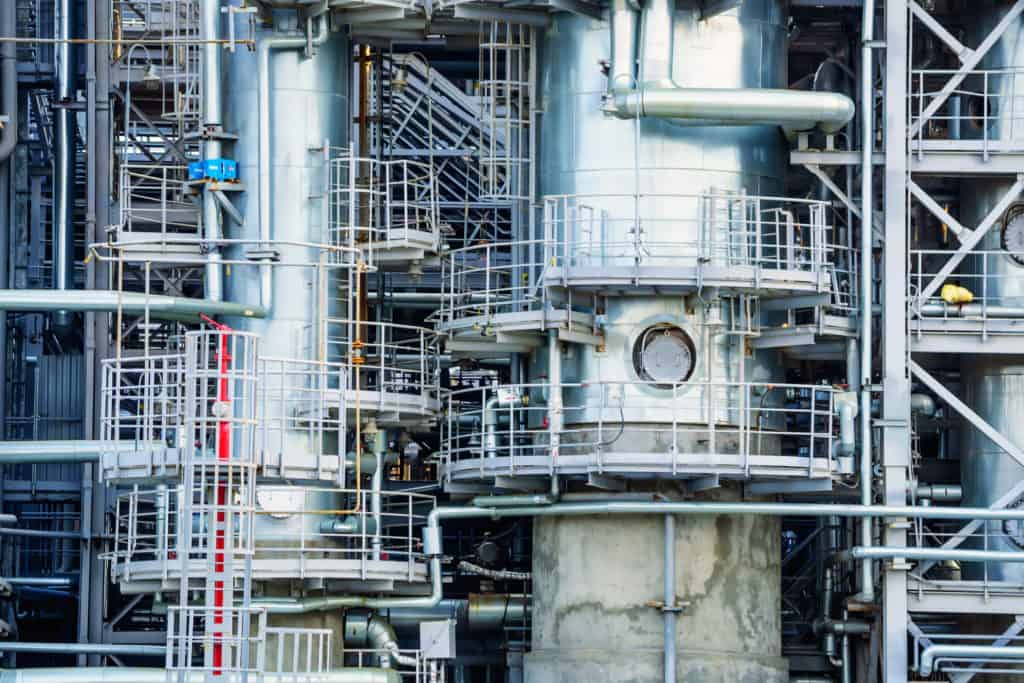
What are refinery turnaround services?
Refinery turnaround services are the inspection, repair, cleaning and replacement work done while a refinery unit is shut down on a planned schedule, usually every three to five years per unit. Heat treatment is one specialty within that work. It covers preheat, PWHT, hydrogen bake-out and refractory dry-out on equipment that is welded or relined during the shutdown.
What heat treatment is needed during a refinery turnaround?
The most common items are preheat for repair welds, post weld heat treatment on piping and vessel welds, hydrogen bake-out on equipment from hydrogen or sour service, and dry-out of new refractory in heaters, FCC units and sulfur plants. Solution annealing, coating cures and line thawing come up on some scopes.
When does refinery piping or a pressure vessel need PWHT?
It depends on the material, wall thickness, service and the governing code or owner specification. ASME B31.3 and ASME Section VIII set thickness and P-number triggers. Owners often add PWHT for amine, caustic and wet H2S service to control hardness and cracking, following API RP 945 and NACE SP0472. The qualified welding procedure and the owner spec give the final answer.
Why is hydrogen bake-out done before welding refinery equipment?
Steel that has operated in hydrogen or sour service absorbs atomic hydrogen. If it is welded with that hydrogen still in the metal, the weld and heat-affected zone can crack. A bake-out holds the area at an elevated temperature for several hours so the hydrogen diffuses out, which makes the repair weld safer to make.
How long does PWHT take during a turnaround?
A single joint can take from a few hours to a full day. The soak time is set by code and thickness, and ramp rates are limited on thick sections. Cooling is often the longest part. Axiom's Axi-Therm method adds controlled cooling, which in Axiom field data brings parts from 800°F to 120°F in about 4 hours, compared with an industry norm of 8 to 48 hours.
Can heat treatment be done without removing the equipment?
Yes. Turnaround heat treatment is done in place. Pad heaters, induction coils or burners are set up on the piping, exchanger or vessel where it sits, with insulation and thermocouples, so the item does not have to leave the unit.
Which heating method is best for a refinery turnaround?
Electrical resistance suits most piping welds and nozzles. Induction is faster on thick chrome-moly and keeps heat local. Combustion heats whole vessels and towers from the inside. Many turnarounds use all three. Axiom chooses a method per item and can blend them with Axi-Therm.
What records do we get after turnaround heat treatment?
Each heat treatment cycle is monitored and recorded. The closeout package typically includes time-temperature charts, thermocouple location maps, procedures and instrument calibration records, so your inspectors can accept the work and release the equipment.
How early should heat treatment be planned for a turnaround?
As early as the work list allows. Bringing the heat treatment contractor in during turnaround planning lets procedures, power, gas and crew counts be settled before mobilization, and puts realistic heat treatment durations into the schedule.
Does Axiom HT serve refineries outside Southern California?
Yes. Axiom HT is based in Signal Hill, California, and works at refineries and industrial plants across California, including the Bay Area and Bakersfield, in Nevada, and across the United States.