

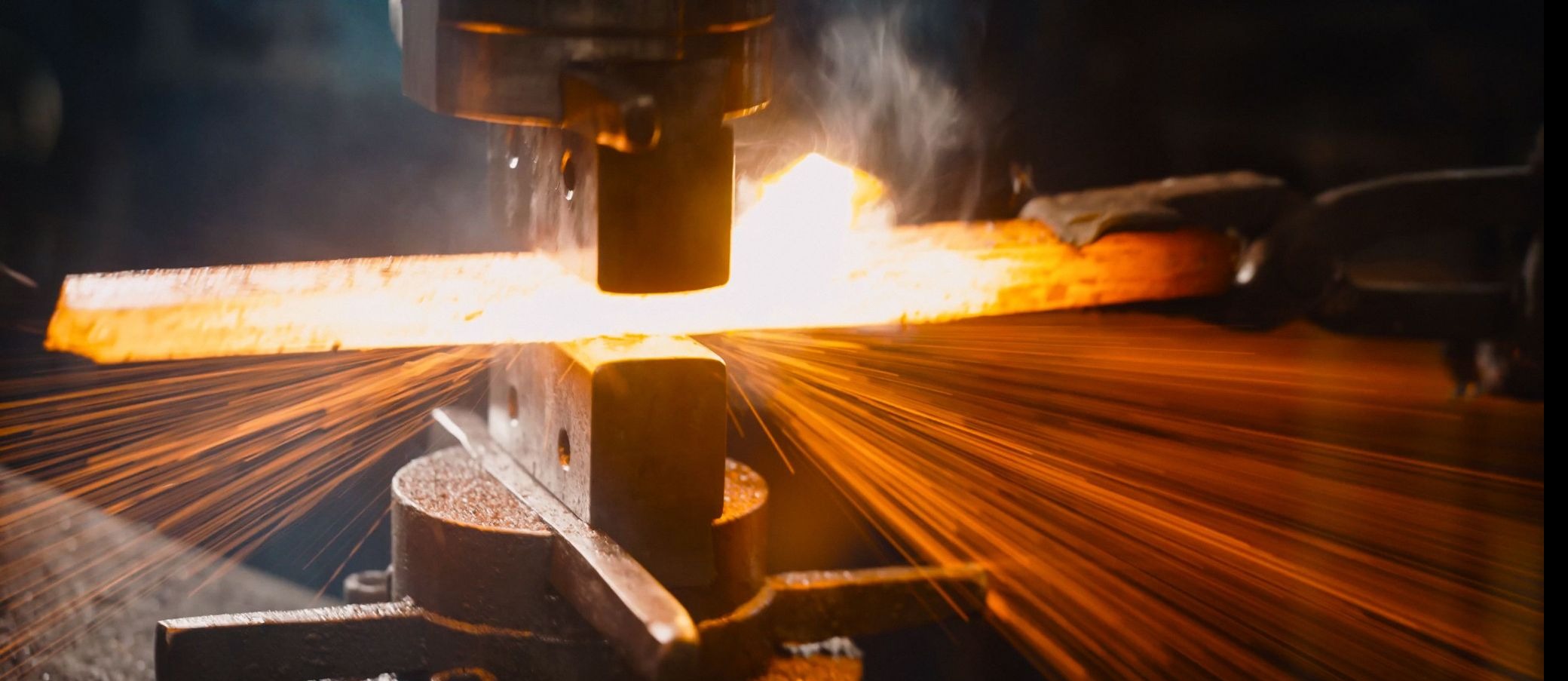
Annealing vs tempering involves two different heat treatment processes with different goals.
Annealing generally softens metal, improves ductility, and makes it easier to machine or form. Tempering is mainly used after hardening to reduce brittleness while retaining useful hardness and strength.
Choosing between them depends on the material, its starting condition, and the properties required in the finished component.
Annealing heats metal to a specified temperature, holds it there, and then cools it under controlled conditions, often slowly.
The process can reduce hardness, improve ductility and machinability, relieve residual stresses, and modify the microstructure. Different types of annealing, including full annealing, process annealing, stress-relief annealing, and spheroidizing, are used for different requirements.
Annealing is commonly selected when metal needs to become softer and easier to work with.
Tempering is generally performed on hardened or quenched steel. The steel is reheated below its lower critical temperature, held for a specified time, and then cooled.
Quenching can produce high hardness but may also leave steel brittle and highly stressed. Tempering modifies the hardened structure to improve toughness and ductility while retaining useful hardness and strength.
The typical sequence is:
Austenitizing → Quenching → Tempering
The correct tempering temperature and holding time depend on the steel grade and required final properties.
Read more: What Does Steel Tempering Do?
The main difference in annealing vs tempering is the condition of the material and the result each process is designed to achieve.
| Factor | Annealing | Tempering |
| Main purpose | Soften metal and improve workability | Reduce brittleness and improve toughness |
| Starting condition | Various material conditions | Usually hardened or quenched steel |
| Heating | Depends on material and treatment | Below the lower critical temperature |
| Cooling | Generally slow and controlled | Controlled cooling after reheating |
| Hardness | Generally decreases | Decreases from the as-quenched condition |
| Ductility | Generally increases | Increases compared with hardened steel |
| Main benefit | Machinability and workability | Toughness with useful hardness |
| Common uses | Machining, forming, stress relief | Gears, shafts, tools, machine components |
In simple terms, annealing is generally used to soften and prepare metal for processing, while tempering adjusts hardened steel for service.
Read more: How Does Heat Treating Steel Work?
Understanding how each process changes material properties helps explain the difference between annealing and tempering.
Annealing generally produces a softer condition. This can make steel easier to machine and form.
Tempering reduces hardness from the as-quenched condition, but it is not intended to make steel as soft as annealing. Instead, it provides a controlled balance between hardness and toughness.
Annealing generally increases ductility while reducing strength and hardness.
Tempering reduces some hardness and strength after quenching while improving ductility and toughness. The exact result depends on the steel grade, temperature, and holding time.
Tempering is especially important when hardened steel needs greater toughness and lower brittleness. It also helps relieve stresses created during quenching.
Annealing can relieve residual stresses caused by processes such as cold working, machining, forming, and previous thermal treatment.
There is no single temperature that applies to every steel.
Annealing temperatures depend on the material, alloy composition, treatment type, and desired microstructure. Many annealing processes use slow cooling to produce a softer structure.
Tempering is performed below the lower critical temperature, with the temperature selected according to the required hardness and toughness. Cooling follows the specified tempering cycle.
Temperature, holding time, and cooling conditions all affect the final properties.
Annealing is generally appropriate when you need to:
For example, a component that is difficult to machine because of excessive hardness may be annealed before machining.
Check out: Detailed Annealing Process in Heat Treatment
Tempering is generally appropriate when hardened steel needs a better balance of hardness and toughness.
It can help:
Gears, shafts, tools, springs, and other hardened components may require tempering.
These three processes are often confused, but their purposes differ.
| Process | Primary purpose | Typical cooling |
| Annealing | Soften and improve workability | Slow, controlled |
| Normalizing | Refine grain structure and improve uniformity | Air cooling |
| Tempering | Reduce brittleness after hardening | Controlled cooling |
The correct process depends on the material's starting condition and the properties required from the finished component.
The wrong process or cycle can produce unsuitable properties.
Annealing a component that requires high hardness may leave it too soft. Insufficient tempering can leave hardened steel excessively brittle, while excessive tempering can reduce hardness and strength more than intended.
Incorrect temperature, holding time, or cooling conditions can also affect dimensional stability and consistency.
This is why heat treatment should be based on the material specification and required final properties, not a generic cycle.
Axiom HT can help determine the appropriate heat treatment based on your material, required hardness, specifications, and application.
Contact us to discuss your component and heat treatment requirements.