

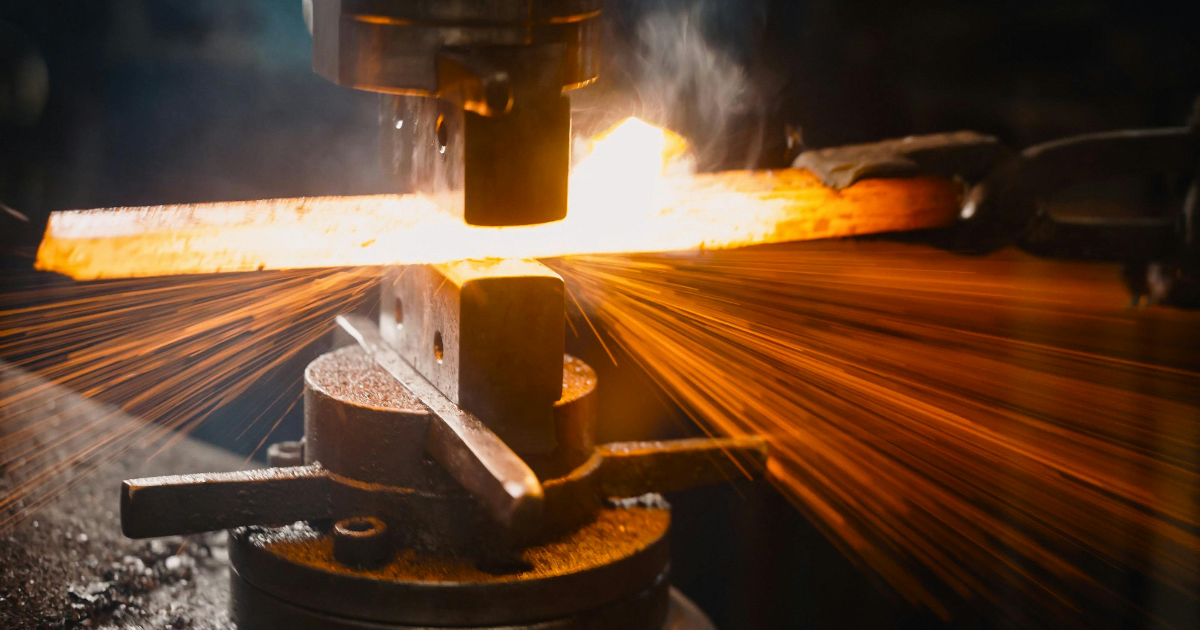
Metals often behave unpredictably after processes like welding, bending, or machining, and this is where what is annealing becomes important in restoring their stability.
In real manufacturing, these materials can turn stressed, uneven, or difficult to work with.
Controlled heat treatment helps bring them back to a balanced state, improving how they perform. It makes metals more workable, reliable, and suitable for further processing in industries like steel, copper, and aluminum production.
Annealing is a controlled heat treatment process used to change the physical and sometimes chemical properties of a material, mainly metals. It involves heating the metal to a specific temperature, holding it, and then cooling it slowly.
The goal is to reduce hardness, relieve internal stresses, and improve ductility. According to industrial sources, this process is widely used in steel, copper, aluminum, and other alloys to make them easier to machine or form.
In simple terms, annealing improves workability and restores the metal’s internal structure after processes like cold working or welding.
Different industrial needs require different annealing methods:
Full annealing heats steel above its critical temperature and cools it slowly to achieve maximum softness, improved ductility, and easier machining for further manufacturing processes.
Process annealing is used during cold working to reduce hardness and restore ductility, allowing metals to be reshaped or formed without cracking or breaking under stress.
Stress relief annealing reduces residual stresses caused by welding, casting, or machining without significantly changing the metal’s microstructure, improving dimensional stability and reducing distortion risks.
Recrystallization annealing restores a deformed metal’s grain structure after cold working, replacing strained grains with new, strain-free ones to improve ductility and reduce hardness.
Spheroidizing annealing is used mainly for high-carbon steels to form spherical carbides, improving machinability, reducing hardness, and making the material easier to cut and shape.
Each type is selected based on material composition and final application requirements.
Annealing offers several important advantages in manufacturing and engineering:
These benefits make it a core process in modern heat treatment industries.
Annealing is widely used across multiple industries where metal performance is critical:
Its ability to balance strength and flexibility makes it essential in high-performance engineering environments.
The success of annealing depends on several factors that influence the final properties of the material. Understanding these factors helps manufacturers achieve consistent and reliable results.
The annealing process follows a carefully controlled heating and cooling cycle that improves the structure and performance of metal components. Each stage serves a specific purpose, helping reduce internal stress, improve ductility, and prepare the material for further manufacturing processes.
The table below outlines the three key stages involved in annealing and their role in achieving the desired material properties.
| Stage | Description | Purpose |
| Heating | The metal is heated to a specific temperature, usually above its recrystallization point. | Prepares the metal's internal structure for transformation and softening. |
| Soaking | The metal is held at the target temperature for a set period. | Allows heat to spread evenly and promotes uniform structural changes throughout the material. |
| Cooling | The metal is cooled slowly, often inside the furnace. | Prevents the formation of new stresses and helps achieve the desired mechanical properties. |
Annealing is a critical step in modern metal processing because it directly impacts product quality and lifespan. Without proper annealing, metals can remain brittle, stressed, or difficult to machine.
Industries rely on it to ensure consistency, especially in mass production environments where precision and reliability matter.
Want deeper insights or tailored heat treatment solutions?
Request AxiomHT technical guidance today and optimize your manufacturing performance with expert annealing process support from our team.