

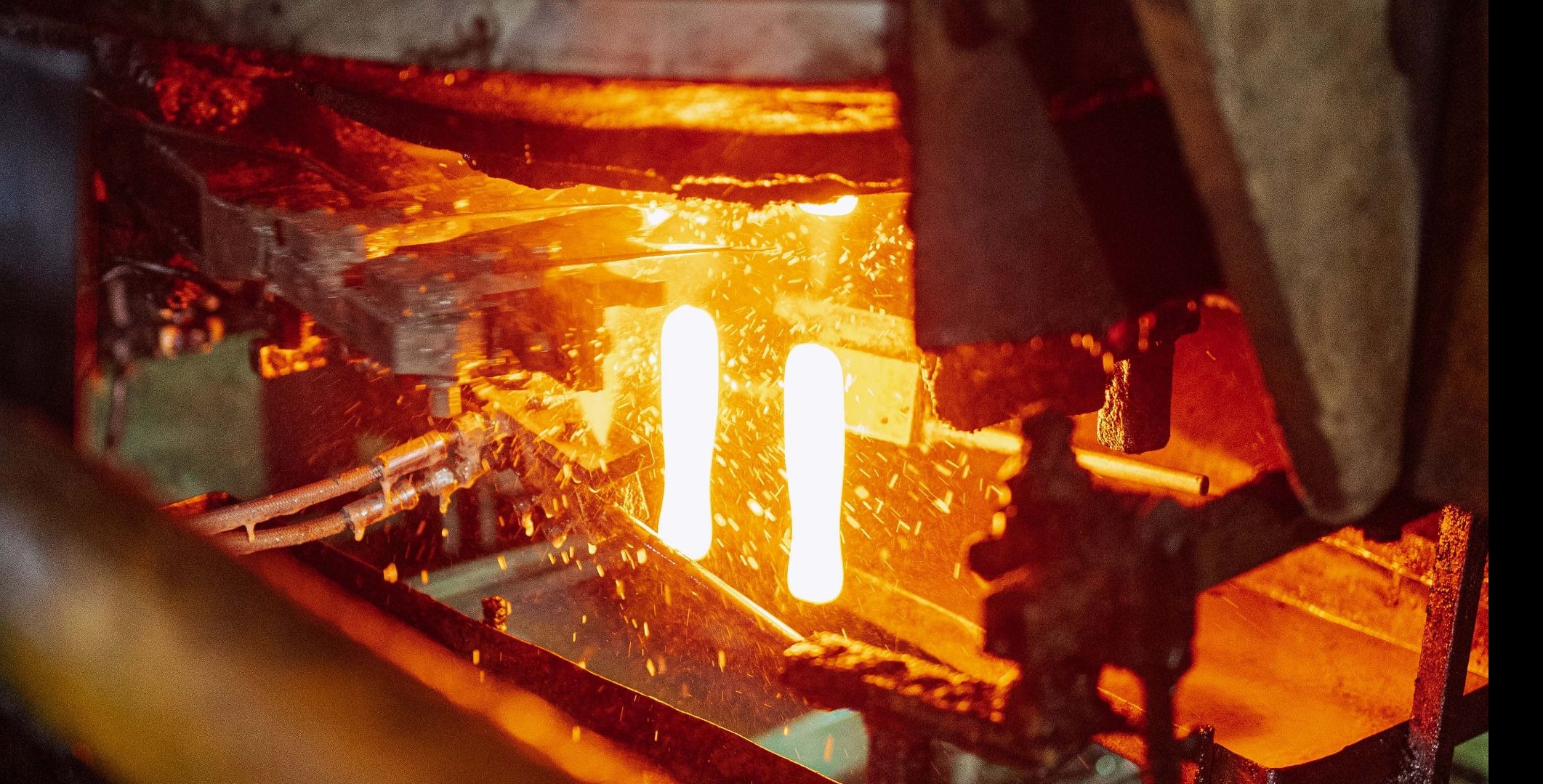
When manufacturers ask what is induction hardening, the simple answer is a heat treatment process that selectively hardens the surface of a metal component. It uses electromagnetic induction to rapidly heat a targeted area before quenching it.
This creates a hard, wear-resistant surface while allowing the core to retain greater toughness.
The process is useful for components exposed to friction, contact stress, impact, or repeated loading.
Induction hardening is a type of surface hardening used primarily for steel components. Unlike processes that chemically change a material's surface, it changes the material's microstructure through controlled heating and rapid cooling.
An induction coil creates an alternating electromagnetic field around the workpiece. This induces electrical currents in the metal, generating heat directly within the component. The selected area is heated to the required austenitizing temperature and then rapidly quenched.
During cooling, the heated surface transforms into martensite, a hard microstructure. The result is a hardened outer layer, known as the case, while the core can remain tougher and more ductile.
Check out: What Does Steel Tempering Do?
The process involves several controlled stages:
The workpiece is positioned near an induction coil designed around its shape and the area requiring treatment.
Alternating current passes through the coil, producing a changing electromagnetic field. This induces electrical currents within the workpiece.
The induced currents generate heat in the metal. Heating can be concentrated in a specific area rather than throughout the entire component.
The targeted section reaches the temperature needed to form austenite. The required temperature depends on the material and desired properties.
The heated area is rapidly cooled, transforming the austenitized layer into martensite and producing the required hardness.
The finished component has a hardened surface and a comparatively tougher core. Frequency, power, heating time, coil design, scan speed, and quenching conditions all influence the final result.
Case depth is a key consideration in induction heat treatment. It is affected by several process variables, including:
In general, higher frequencies concentrate heating closer to the surface, while lower frequencies allow deeper penetration. However, frequency works together with other process parameters and should not be considered the only factor controlling case depth.
Effective case depth refers to the depth at which the material meets a specified hardness requirement. Total case depth describes the broader area affected by the treatment.
For engineering applications, the required case depth should be established according to the component's material, design, loading conditions, and applicable specifications.
Learn more about: Annealing Process in Heat Treatment
Carbon steels and alloy steels with suitable hardenability are commonly induction hardened. Certain stainless steels and cast irons may also be suitable depending on their composition and the required properties.
Material chemistry matters because induction hardening does not add carbon to the surface. The steel must already have the appropriate composition to develop the required hardness after heating and quenching.
Induction hardening provides fast, localized surface hardening that improves wear resistance, fatigue strength, durability, and process control while preserving a tougher core.
Only the required area can be hardened, leaving the core with different mechanical properties.
Induction heating can rapidly deliver heat to the treatment area, making it suitable for applications where processing speed matters.
A hardened surface can better withstand friction and repeated contact.
The hardened layer can help components withstand repeated surface and contact stresses.
Heating can be precisely targeted, and established process parameters can provide repeatable results.
Induction hardening is widely used for components where surface durability is important.
| Component | Primary Purpose |
| Gears | Wear and contact resistance |
| Shafts | Surface durability |
| Axles | Resistance to repeated loading |
| Crankshafts | Surface durability |
| Camshafts | Wear resistance |
| Pins | Reduced surface wear |
| Bearings and raceways | Contact fatigue resistance |
The process can be adapted to different component sizes and geometries, although coil design and process parameters must be developed for the specific part.
You might like to know about P91 Materials
The appropriate heat treatment depends on the material, geometry, required case depth, hardness, and application.
| Process | How It Works | Key Characteristic |
| Induction hardening | Electromagnetic heating and quenching | Fast, localized surface hardening |
| Carburizing | Carbon diffuses into the surface | Carbon-enriched case |
| Nitriding | Nitrogen diffuses into the surface | Hard, wear-resistant surface |
| Flame hardening | Flame provides localized heating | Selective surface treatment |
| Through hardening | Heating and quenching through the material | Higher overall hardness |
Unlike carburizing and nitriding, induction hardening relies on rapid heating and cooling to change the material's microstructure rather than adding carbon or nitrogen.
Successful induction hardening requires careful process control. Component geometry can affect heating uniformity, while coil design determines how electromagnetic energy is distributed.
Power, frequency, heating time, and scan speed influence the heating pattern. Quenching conditions also need to match the material and required properties.
Poorly controlled parameters can contribute to uneven hardness, incorrect case depth, overheating, cracking, or other defects. For this reason, induction hardening should be treated as an engineered process rather than a one-size-fits-all treatment.
Need reliable surface hardening for your components?
Talk to Axiom HT today to discuss your requirements, explore the right induction hardening solution, and obtain a tailored quote.