

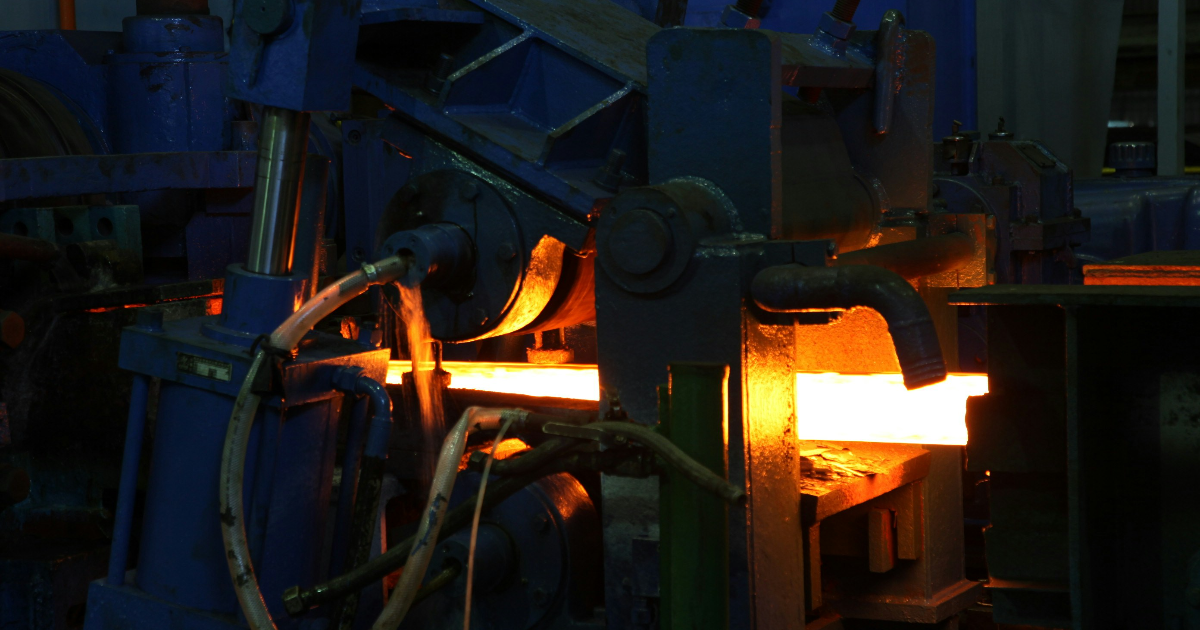
Normalizing Heat Treatment: Process, Temperatures & Benefits

Written by Azmi Anees on July 29, 2026

Normalizing is a heat treatment method widely used to refine grain structure and reduce residual stresses in metals. With a controlled heat-and-air-cool cycle, it resets the internal structure of metals before service loads.

In this blog, discover how normalizing heat treatment actually works, with temperatures, benefits, and more.

You Might Also Like: 10 Innovative Heat Treatment Solutions to Improve Efficiency and Compliance 


What Exactly Is Normalizing?

Normalizing is a heat treatment process used primarily on ferrous metals like carbon steel, alloy steel, and cast iron. 

Metals are heated to their particular normalizing temperatures, held there, and then cooled in still air. The open-air cooling step is what separates normalizing from full annealing, and it's why the process tends to run faster and is more economical.

  • Ferrous focus: It applies mainly to carbon and alloy steels and cast iron; non-ferrous metals rarely need it.
  • Not the same as annealing: Annealing cools slowly inside a furnace; normalizing cools in open air, producing a finer microstructure and typically higher strength and hardness.
  • A reset button: Normalizing restores a known, consistent starting condition after casting, forging, rolling, or welding.

Check Out: PWHT Procedure Explained: Step-by-Step Guide to Post-Weld Heat Treatment 
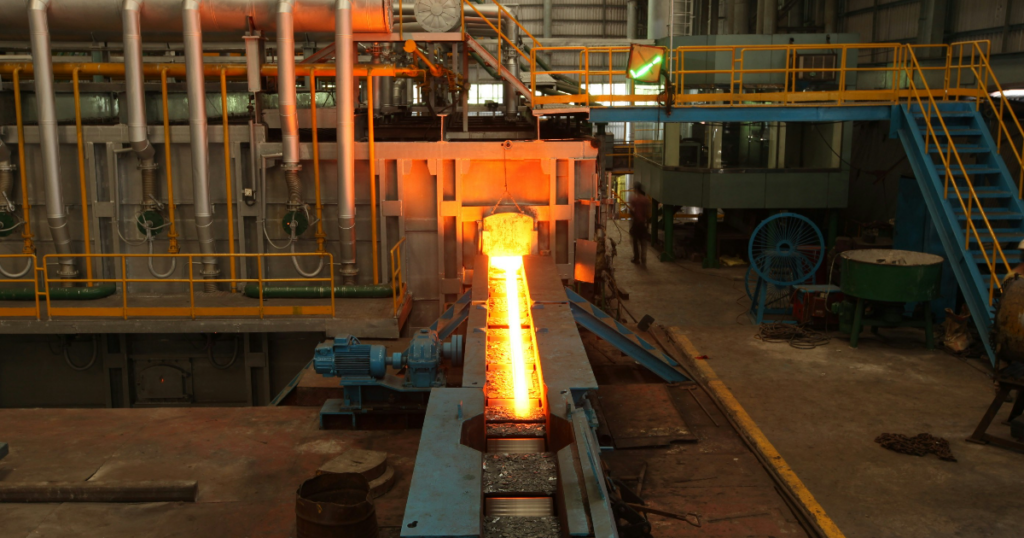

What Temperature Does Normalizing Actually Call For?

Normalizing heat treatment

Normalizing temperatures generally fall between 750°C and 980°C (1,380°F to 1,800°F), depending on the alloy. The target is roughly 30°C to 80°C above the steel's upper critical temperature (for example, Ac3 for hypo-eutectoid steels or Acm for higher-carbon grades) so the entire section fully transforms into austenite.

  • Low-carbon steel: Typically sits toward the lower end of the range, closer to 850-900°C.
  • Higher-carbon and alloy steels: May need higher temperatures to fully dissolve carbides.
  • Hold time: A common rule of thumb is roughly one hour per inch (25 mm) of section thickness, per published metallurgical guidance.

Explore: Heat Treatment of Metals: Processes, Types, and Applications 


Understand How the Process Works, Step by Step

Every normalizing cycle moves through the same three stages, regardless of part size or alloy.

  1. Heating: The component is ramped up evenly to the required austenitizing temperature, avoiding thermal shock that could distort or crack the part.
  2. Soaking: The metal is held at temperature long enough for the full cross-section to transform into austenite.
  3. Air cooling: The part is removed from heat and left to cool freely, which, in carbon steels, forms a fine, uniform ferrite-pearlite structure.

You Might Also Like: Industrial Heat Treatment Service: Cost, Process & Value for Your Project 


What Do You Actually Gain From Normalizing?

The global heat-treating market is on track to grow from $118.3 billion in 2026 to $152.5 billion by 2033, and normalizing's cost-to-benefit ratio is a big reason it stays in steady demand.

  • Grain refinement: Replaces coarse, uneven grains from casting or forging, with a fine, uniform structure.
  • Stress relief: Reduces residual stresses from welding, machining, or forming before they can trigger cracking.
  • Better machinability: A consistent microstructure cuts more predictably and extends cutting-tool life.
  • Improved toughness: Grain refinement resists impact loading better than the structure it replaces.
  • Lower cost than full annealing: No furnace cooling cycle needed, so turnaround is faster and cheaper.

Check Out: Welding Quality Inspection Guide and Checklist 

Normalizing vs. Annealing vs. Hardening: What's the Real Difference?

Normalizing vs. Annealing vs. Hardening

Normalizing gets confused with annealing and hardening more than almost any other heating term; picking the wrong one on a spec sheet can mean the wrong properties end up in service. 

Before deciding which process your project actually needs, it helps to see all three side by side.

All three start the same way, that is, heat above the critical temperature, but the cooling method changes everything about the outcome.

ProcessCooling MethodResulting HardnessTypical Use
NormalizingOpen, still airModerate; harder than annealedGrain refinement, stress relief, pre-fabrication prep
AnnealingSlow, inside a closed furnaceLowest; maximum softnessMaximum ductility for heavy forming or machining
HardeningRapid quench (water, oil, or polymer)Highest; however, brittle without temperingWear resistance, load-bearing components

Explore: Vessel Considerations During Post Weld Heat Treatment - Axiom HT 


Where Does Normalizing Actually Get Used? Understand Industrial Applications

  • Pipelines and pressure vessels: Used where specifications require grain refinement and uniform mechanical properties before service.
  • Structural steel and heavy fabrication: Restores consistent properties across large, thick-section components.
  • Castings and forgings: Breaks down the coarse grain structure that forms during solidification or hot working.
  • Pre- and post-weld prep: Brings material to a known baseline before or after fabrication work.

You Might Also Like: Heat treatment chemical processing plant 


Why On-Site Normalizing Changes the Math

Most published guides on normalizing assume the part can be trucked to a shop furnace.

Large pressure vessels, structural steel, and long pipes often can’t be, so the furnace has to come to the part instead.

  • Field-ready heating methods: On-site combustion, electrical resistance, and induction heating bring controlled, code-compliant thermal cycles directly to the component.
  • Full documentation: Temperature charts, ramp rates, and hold times are recorded for ASME and API traceability.
  • Faster turnaround: Axiom HT's patent-pending Axi-Therm blended heating and cooling system can cut cooling time from 8-48 hours down to under 4 hours.

This is where 135+ years of combined field experience matters. At Axiom HT, we know how to hit the right normalizing temperature on a live jobsite, not just in a controlled shop environment.


Ready to get your steel to spec without shipping it to a shop? Contact Axiom HT and put 135+ years of engineered, on-site heat treatment experience behind your next project.


Frequently Asked Questions (FAQs)

Yes, normalizing can be done before or after hardening, but it's typically done first to reset grain structure. If done after, it will undo the hardened structure since normalizing re-austenitizes the metal.

Minor dimensional changes can occur due to thermal expansion, but they're usually minimal compared to hardening. Precision components may need light machining allowance to account for this.

Total cycle time varies with section thickness, generally following the one-hour-per-inch soak rule plus heating and air-cooling time. Most cycles run a few hours, though large components can take longer.

A part can be normalized more than once, especially if it undergoes additional welding, forming, or machining afterward. Repeated normalizing won't harm the steel as long as temperatures stay within proper limits.

Crews need calibrated temperature-control equipment, thermocouples, and documented ramp/hold procedures to meet compliance codes. Technicians should also be trained and certified in heat treatment practices for code compliance.

Cooling too fast may produce localized hardening or uneven microstructure, while cooling too slowly may not fully refine the grain. Consistent, still-air cooling is key to achieving uniform results.

Thicker or oddly shaped parts may require longer heating times and specialized on-site equipment like induction or resistance heating. Shops offer more controlled conditions, but on-site methods can still meet code requirements with proper setup.

It depends on the part's history and end-use. Normalizing suits components needing grain refinement or stress relief after fabrication. A metallurgist or heat treatment specialist can confirm the right process based on specs.

Hardness testing, microstructure analysis, and temperature-chart verification are common ways to confirm proper normalizing. These checks ensure grain refinement and mechanical properties meet the required specification.

Related Posts

On-Site Heat Treatment Specialists. Providing Electrical resistance, Combustion, Induction, and more.
Axiom Heat Treatment BBB Business Review
California714-655-3205
Axiom Heat Treatment
16042 Craig Ln.
Huntington Beach, CA 92647
© 2026 Axiom HT All Rights Reserved | Call: 714-655-3205 | Powered By Ouroai LLC