

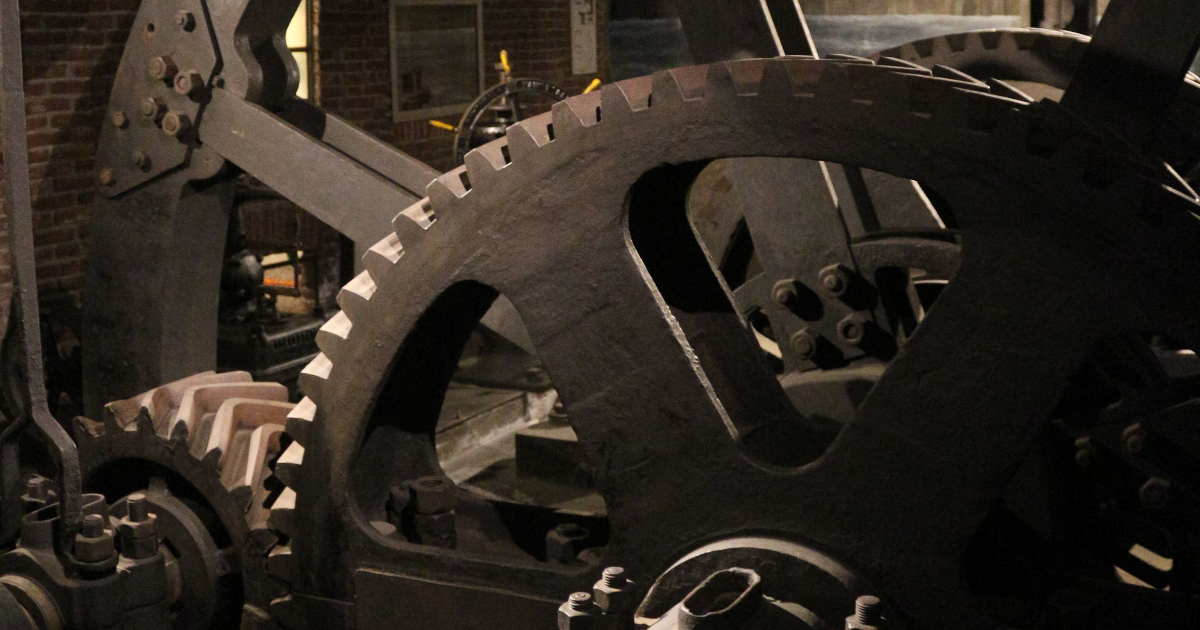
Induction hardening process parameters like frequency, power density, heating time, quench conditions, and scan speed all work together to control how the part heats, transforms, and cools.
But when so many factors work together, a small change in one setting can affect the final result, leading to variations in case depth, hardness, distortion, and ultimately part rejection. In this guide, we break down each parameter and discuss the role it truly plays in induction hardening.
You Might Also Like: How Does Heat Treating Steel Work?
Induction hardening process parameters are settings that control how a part heats, transforms, and cools inside the coil.
Check Out: Industrial Heat Treatment Service: Cost, Process & Value for Your Project
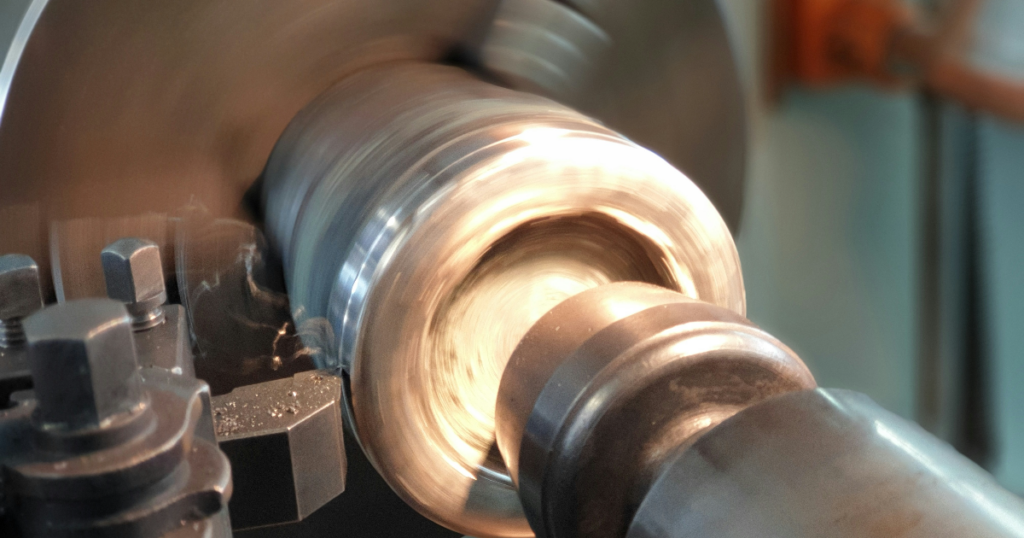
Frequency is one of the key parameters controlling heating depth. Induced current concentrates near a part's surface, a phenomenon called the skin effect, and that depth changes with frequency.
Lower frequencies produce thicker case-hardened layers, while higher frequencies produce thinner ones.
| Frequency Range | Typical Case Depth | Common Applications |
| 60 Hz – 10 kHz | Generally suited to deeper heating/case depths, especially on large sections | Large shafts, railway wheels, heavy rollers |
| 10 – 50 kHz | Commonly used for medium/deeper case hardening | Crankshafts, axle shafts, large gears |
| 50 – 200 kHz | Generally suited to shallower case depths | Camshafts, medium gears, splines |
| 200 – 600 kHz | Mostly suited to very shallow surface hardening | Fasteners, small tools, precision parts |
These ranges are general guidelines, not fixed rules. The appropriate frequency depends on the material, part geometry, required case depth, power density, and heating time.
Modern inverter technology can now shift frequency from 5 kHz to 60 kHz instantly mid-cycle, letting one scanner handle a much wider range of part geometries than older, fixed-frequency machines.
Explore: 10 Innovative Heat Treatment Solutions to Improve Efficiency and Compliance
Power density (measured in kW per square centimeter) sets how fast the surface heats up. It works hand in hand with frequency and time.
You Might Also Like: Heat Treatment of Metals: Processes, Types, and Applications
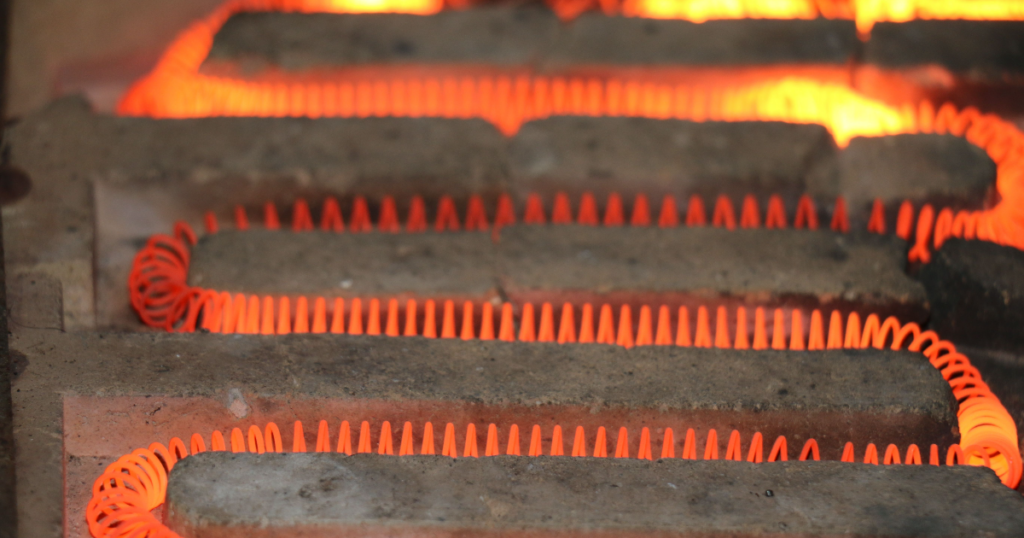
Heating time, or dwell time, can run anywhere from two to thirty seconds in general.
Check Out: What is P91 Material?
Quenching is where the transformation locks in. The medium and rate you choose decide the final hardness, and how much distortion risk you're carrying.
| Quench Medium | Cooling Speed | Trade-Off to Know |
| Brine | Fastest | Very rapid cooling can increase the risk of cracking and distortion. |
| Water | Very fast | Rapid, but the Leidenfrost effect may delay cooling. Distortion and corrosion risks are still high. |
| Polymer (PAG) | Adjustable | Tunable curve, but sensitive to contamination and agitation conditions that can affect cooling uniformity. |
| Oil | Slower, controlled | Lower cracking risk, higher cost and cleanup |
| Air / Gas | Slowest | Low heat capacity and thermal conductivity. Suitable for alloys prone to distortion |
These frequency ranges are general guidelines, not fixed rules. The correct frequency depends on the material, part geometry, required case depth, power density, and heating time.
Even a small amount of contamination matters here. Research on polymer quenchants found that mineral-oil contamination measurably slowed cooling rates and led to inadequate case depth on rejected parts.
Read more: What Does Quenching Do to Metal?
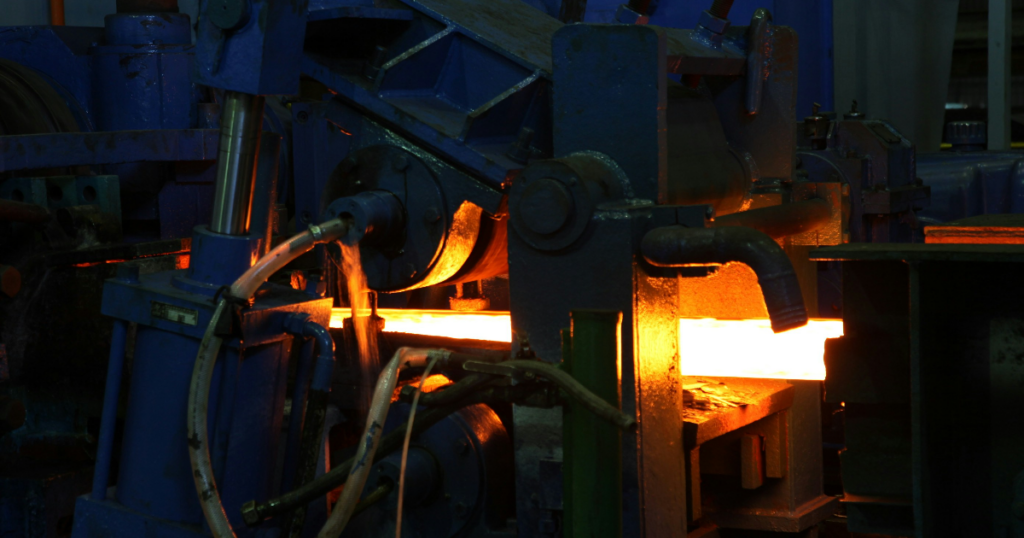
There are two main approaches to apply these settings, and picking the wrong one undercuts even a perfect parameter sheet.
Explore: Welding Quality Inspection Guide and Checklist
Induction hardening parameters are not independent dials. Changing one can affect how the others need to be adjusted. For example,
That is why induction hardening is usually developed around a target hardness and case depth, rather than by choosing each parameter separately. The material, part geometry, coil design, and required hardened depth all help determine the starting settings.
That is why induction hardening is usually developed around a target hardness and case depth, rather than by choosing each parameter separately. The material, part geometry, coil design, and required hardened depth all help determine the starting settings.
The goal is not simply to maximize heating. It is to deliver enough heat to the required region, at the right rate, and then cool it under controlled conditions.
You Might Also Like: What Is the Rockwell Hardness Scale?
Hardening process parameters are validated against the part specification using hardness testing and metallographic examination to confirm the required properties and case depth.
Most induction-hardening problems can be traced to a handful of preventable process issues, besides the basic control of the required parameters.