

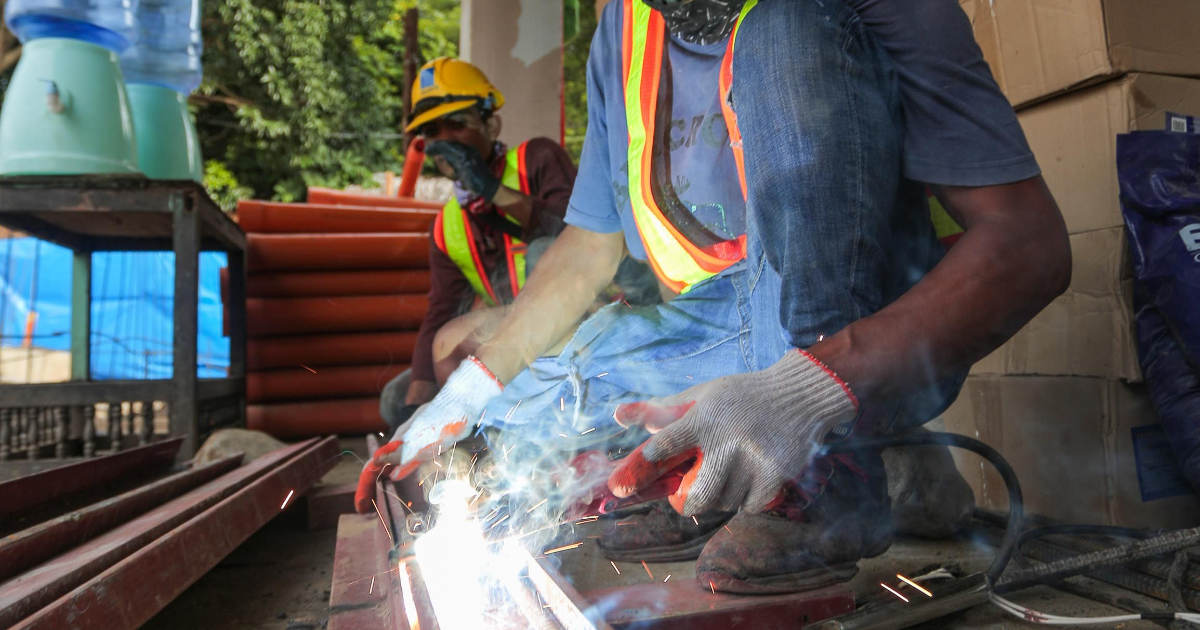
A single missed weld defect in a pressure vessel can trigger hydrostatic retests, partial disassemblies, and costly regulatory shutdowns, making structured welding quality inspection process critical.
In this guide, we break down every stage of weld inspection, with a practical field checklist, and explain where heat treatment fits in.
You Might Also Like: What Does Heat Treatment Cost?

A weld can look clean on the surface and still carry hydrogen cracking, lack of fusion, or dangerous residual stresses underneath.
According to the American Welding Society, poor weld quality leads to safety risks, non-value-added costs, and damage to business.
Welding quality inspection is the systematic process of verifying weld integrity through pre-weld, in-process, and post-weld inspection to ensure code compliance and structural safety.
This guide is intended for:
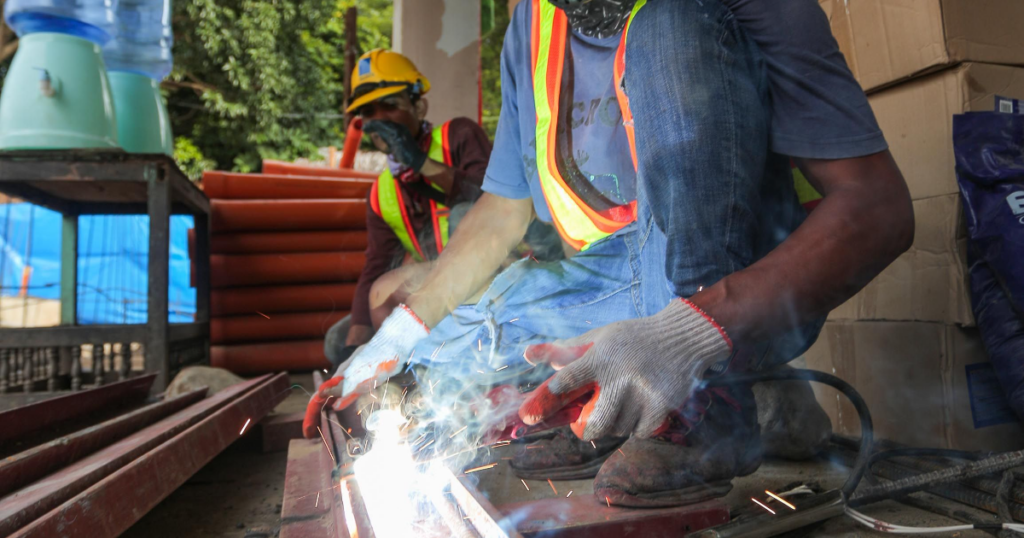
This is your highest-leverage stage. Problems caught here cost almost nothing to fix. Problems missed here compound through every pass that follows.
Preheat is one of the most commonly skipped steps in field welding, and is also one of the most consequential.
In refinery shutdown work, inspectors often see preheat skipped during night shifts or emergency repair jobs because crews try to reduce downtime. These shortcuts are one of the leading causes of delayed hydrogen cracking discovered during hydrotesting.
| Inspection Item | Check | Notes |
| Correct minimum preheat temperature reached | ☐ | Per WPS and material spec |
| Measure temperature at a distance of 4×t (maximum 50 mm) from the groove edge for thickness ≤ 50 mm, or within 75 mm of the joint for thicker sections | ☐ | Per ISO 13916 |
| Uniform heating across joint area | ☐ | No cold spots |
| Calibrated measurement tool used | ☐ | Thermocouple, Tempilstik, or IR thermometer. Traceability requirement. |
| Interpass temperature limits confirmed | ☐ | Max interpass per WPS |
| Preheat maintained during tack welding | ☐ | Often missed |
Check Out: Heat Treatment of Metals: Processes, Types, and Applications
In-process inspection catches parameter drift, temperature violations, and technique issues before they're buried under the next pass.
Monitor continuously during welding:
For multi-pass welds on alloy steels: Interpass temperature control is a metallurgical requirement. Materials like P91 and Chrome-Moly can develop microstructural damage if interpass temperatures exceed code limits.
Read More: Pre and Post Weld Heat Treatment: The Key Differences
The final stage of welding quality inspection confirms that the weld is structurally sound, dimensionally correct, and code-compliant.
Visual Testing (VT) is the most immediate and cost-effective method. A trained inspector looks for:

NDT method selection depends on material, joint geometry, applicable code, and the type of defect most likely in that weld configuration.
| NDT Method | Detects | Best Used For |
| Ultrasonic Testing (UT) | Internal defects, laminations, cracks | Thick sections, pressure vessels, piping |
| Radiographic Testing (RT) | Hidden voids, inclusions, porosity | Code-required volumetric examination |
| Magnetic Particle Testing (MT) | Surface and near-surface cracks | Ferromagnetic materials |
| Dye Penetrant Testing (PT) | Fine surface flaws | Non-porous, non-magnetic materials |
| Visual Testing (VT) | Surface defects, weld profile, dimensions | All weld inspections |
Welding quality inspection doesn't end with NDT. For many industrial applications, Post Weld Heat Treatment (PWHT) is a required next step.
PWHT relieves residual stresses created during welding, reduces hardness in the heat-affected zone, and improves ductility and toughness. Without it, a weld that passes visual and NDT inspection (before or after PWHT) can still fail in service under cyclic loading or aggressive environments.
After PWHT, inspection is repeated, including visual checks, hardness testing in the HAZ, and NDT verification of mechanical properties.
Check Out: Axiom HT Preheat Services — engineered preheat solutions for critical industrial applications

Documentation is your legal and technical record. In regulated industries, an undocumented inspection is a failed inspection.
ISO 3834-2 Clause 12 requires full documentation of all inspection activities. If your current process doesn't generate this paper trail by default, your checklist needs rebuilding.
| Document | What to Record |
| Welder ID & qualification record | Name, cert number, expiry, WPS scope |
| WPS number | Revision, applicable code |
| Material traceability | Heat number, grade, thickness |
| Preheat temperature log | Measured temp, tool used, location |
| In-process inspection notes | Interpass temp, parameter deviations |
| NDT method and results | Examiner cert, acceptance criteria, findings |
| PWHT record (if required) | Time/temp chart, ramp rate, hold duration |
| Repair history | Defect type, repair method, re-inspection result |