

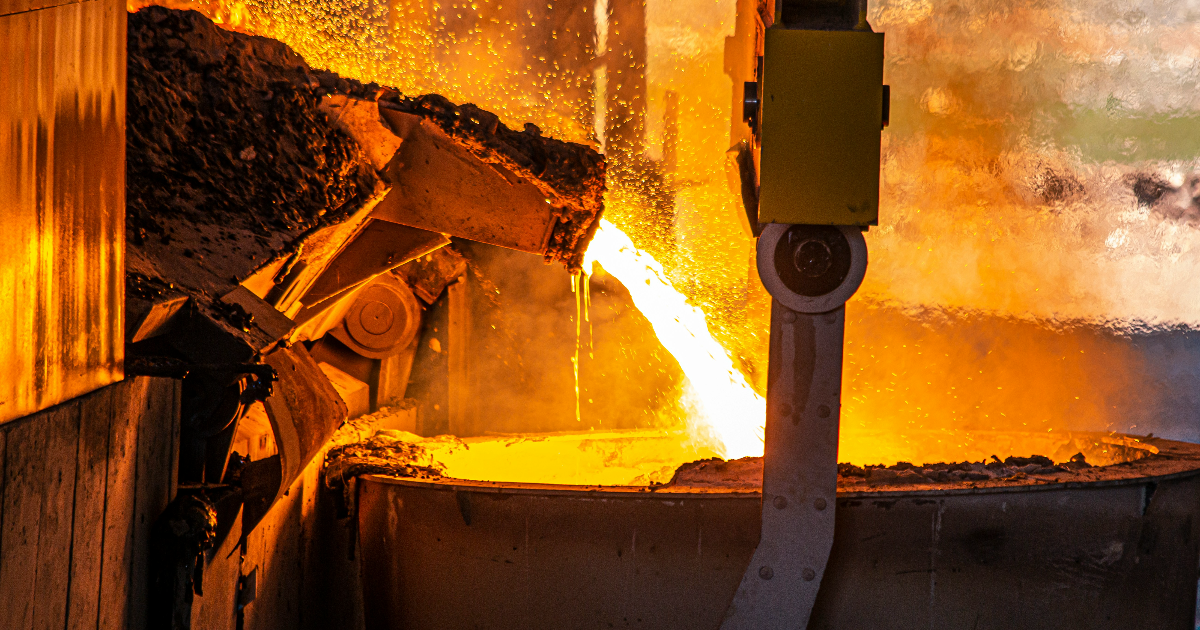
How Does Heat Treating Steel Work?

Written by Azmi Anees on July 27, 2026

Discover how heat treating steel works and why it's one of the most important processes for improving steel’s strength, hardness, and durability. 

What looks like a simple cycle of heating and cooling is actually a precise process that permanently reshapes the steel's microstructure. In this blog, we'll break down how heat treatment of steel works, what happens inside steel during treatment, and where things can go wrong if the process is rushed.

You Might Also Like: 10 Innovative Heat Treatment Solutions to Improve Efficiency and Compliance 


What's Actually Happening Inside the Metal?

Steel is mostly iron with a small amount of carbon mixed in. At room temperature, the iron atoms sit in a fixed, orderly pattern

Here, the amount of carbon present largely decides how the steel will respond once heat is introduced. 

Heat changes that. 

  • As steel climbs past a specific threshold (around 1,340°F to 1,650°F for most carbon steels), the atomic structure shifts into a phase called austenite, where carbon dissolves into the iron. This is the reset point, where much of the previous microstructure is dissolved and the steel becomes ready to form a new structure during cooling.
    • Cool it fast, and the atoms don't have time to organize, so they get locked into a hard, brittle structure
    • Cool it slowly, and they have time to settle into something softer and easier to work with. 

Whichever structure the steel forms when it cools determines whether the final part is hard and wear-resistant, or soft and workable. 

Check Out: Industrial Heat Treatment Service: Cost, Process & Value for Your Project 
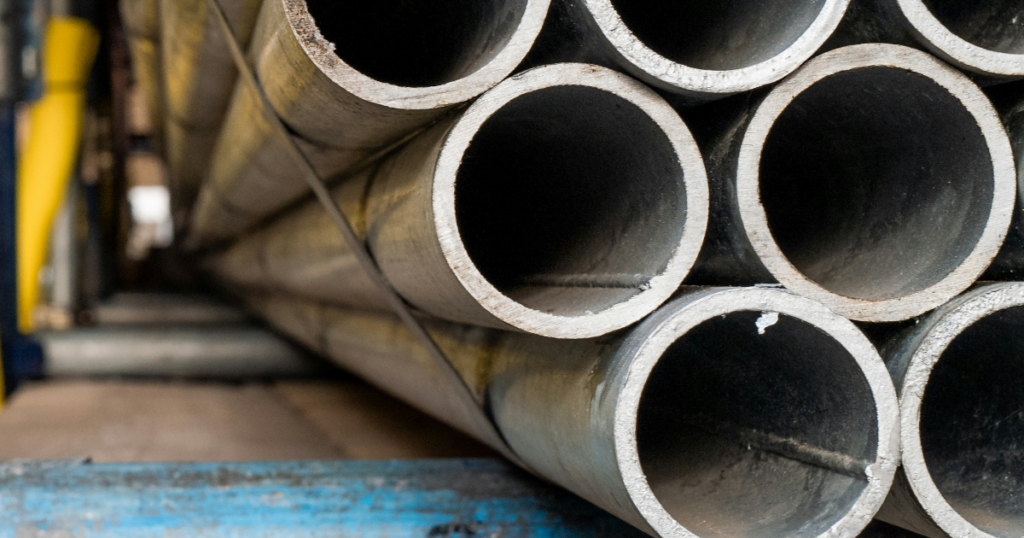

What Are the Main Ways to Heat Treat Steel?

Heat treatment of steel can work in different ways as different goals call for different heating and cooling sequences

The following five methods cover most industrial applications, from raw stock waiting to be machined to finished parts about to go into service.

1. Annealing

Steel is heated close to its critical temperature, then cooled slowly, often right inside the furnace. This produces ferrite and pearlite, structures that are softer and more ductile than what fast cooling produces.

  • Softens the metal and improves ductility
  • Relieves stress left over from welding, casting, or cold working
  • Makes steel easier to form afterward

2. Normalizing

The heating stage during normalization is similar to annealing, but the steel cools in open air instead of the furnace. Faster, less controlled cooling gives a different balance of properties than annealing.

  • Refines and evens out the grain structure
  • Produces steel that's stronger than annealed steel, though less uniform in thicker sections

Explore: Pre and Post Weld Heat Treatment: The Key Differences 

3. Hardening (Quenching)

Steel is heated into the austenite range, then cooled fast, typically in oil or water. The rapid cooling doesn't give the atoms time to settle into a soft structure, so they lock into martensite instead. 

This is the hardest structure steel can form.

  • Boosts strength dramatically, but the trade-off is brittleness
  • Rarely used as a final step on its own as untempered martensite is too brittle for most applications

4. Tempering

Hardened steel is reheated to a lower temperature, well below the critical point, then cooled again.

  • Cuts brittleness without giving up much hardness
  • Almost always follows hardening, rarely skipped on structural or load-bearing parts

5. Case Hardening

Carbon or nitrogen is diffused into just the surface layer of the steel, leaving the interior chemistry largely untouched.

  • Creates a hard, wear-resistant outer shell
  • Keeps the core soft and tough, ideal for gears, shafts, and fasteners

You Might Also Like: How Does Induction Heating Work? A Complete Guide to the Induction Heating Process 
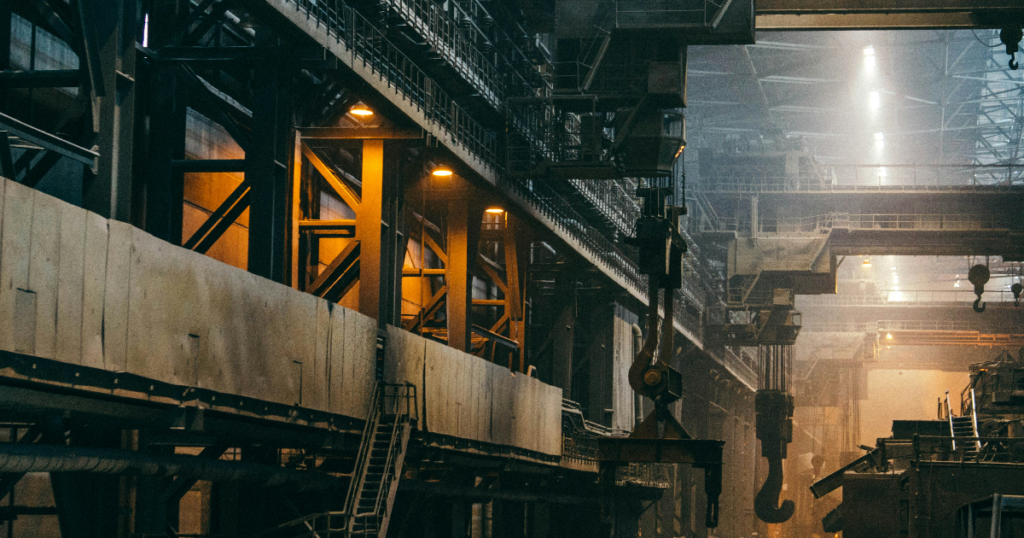

Shop Furnace vs. On-Site Heat Treatment: What's the Difference?

All five methods above can happen inside a shop furnace

But pipelines, pressure vessels, and refinery components usually can't be shipped anywhere, and taking them out of service just to travel to a furnace isn't realistic. 

This is where on-site heat treatment comes in: instead of moving the steel, the equipment comes to the job site. Common field applications include preheat weld treatment, post-weld heat treatment (PWHT), hydrogen bake-out, and solution annealing

On-site heating methods:

On-site crews typically rely on the following three heating methods:

  • Electrical resistance: Low-voltage, flexible ceramic elements wrap around the component for precise, targeted heating.
  • Induction: Electromagnetic currents heat the metal quickly, well suited to complex geometries.
  • Combustion: Gas-fired burners heat large components or enclosed spaces where electric heating isn't practical. 

Each method controls temperature ramp rates, hold time, and cooling in slightly different ways, but the underlying metallurgy is fundamentally the same. The phase changes are the same; only the delivery changes, and the right choice usually comes down to the size and shape of the component rather than the outcome you're after.

Check Out: Field Heat Treatment: A Comprehensive Guide


What Happens When Heat Treating Goes Wrong?

Heat treating steel is unforgiving. Heat too fast, cool too slow, or skip a step, and the consequences show up later; sometimes even months later, well after the part has already been put into service.

  • Cracking: rapid, uneven cooling creates internal stress that splits the metal
  • Embrittlement: incorrect hold times or missed tempering leave steel dangerously brittle
  • Warping: uneven heating distorts the shape of the finished part
  • Premature failure: welds and pressure components can fail in service, long after installation

This is exactly why documentation matters. Every reputable heat treatment provider should track temperature charts, ramp rates, and hold times for every project.


Want to know if your project needs preheat, PWHT, or a full engineered heating and cooling plan? Contact Axiom HT today for a detailed plan on steel heat treatment for your business.


Frequently Asked Questions (FAQs)

Most carbon steels enter the austenite phase between roughly 1,340°F and 1,600°F, though the exact number depends on the steel's carbon and alloy content.

Both heat steel to a similar range. Annealing cools slowly inside the furnace for maximum softness, while normalizing cools in open air, producing a stronger, more refined grain structure.

 Hardening alone creates martensite, which is hard but brittle. Tempering reheats the steel to a lower temperature, trading a small amount of hardness for much better toughness.

Post-weld heat treatment relieves residual stress created during welding and helps remove trapped hydrogen, reducing the risk of cracking in high-pressure piping and vessels.

Most carbon and alloy steels respond well to heat treatment, but the exact temperatures, hold times, and cooling rates need to be matched to that specific steel's composition.

Without proper preheat or PWHT, residual stress and trapped hydrogen can lead to cracking, sometimes appearing months after the project is finished and back in service.

Related Posts

On-Site Heat Treatment Specialists. Providing Electrical resistance, Combustion, Induction, and more.
Axiom Heat Treatment BBB Business Review
California714-655-3205
Axiom Heat Treatment
16042 Craig Ln.
Huntington Beach, CA 92647
© 2026 Axiom HT All Rights Reserved | Call: 714-655-3205 | Powered By Ouroai LLC