P91 pipes are built for demanding high-temperature, high-pressure service, but knowing where it comes from is just as important as knowing what it can handle. Understanding who makes P91 pipes for refineries means looking beyond the pipe mills to distributors, fabricators, and heat-treatment providers involved along the way.
In this blog, we’ll break down who does what and what buyers should look for.
You Might Also Like: P91 Heat Treatment Playbook
Understanding P91 Pipes
P91 pipe is the common name for ASTM A335 Grade P91 - a modified 9% chromium, 1% molybdenum alloy steel built for a refinery’s hottest, highest-pressure corners. It belongs to a family called Creep Strength Enhanced Ferritic (CSEF) steels, engineered to hold their strength for decades at temperatures that would slowly deform ordinary carbon steel.
- Precision chemistry: chromium (8.0-9.5%) resists oxidation, molybdenum boosts creep resistance, and small additions of vanadium and niobium form fine carbonitride precipitates which build the real source of P91’s strength.
- A deliberate upgrade: P91 was developed in the 1970s-80s by Oak Ridge National Laboratory to replace P22, which tops out at around 565°C (1,050°F) roughly.
- Thinner, lighter walls: P91 holds up to roughly 650°C (around 1,200°F), letting engineers use walls 20-40% thinner when compared to P22. P91 offers less weight and lower material cost for more efficient industrial processes.
Check Out: What Is the Rockwell Hardness Scale?
P91 Manufacturer vs. Distributor vs. Fabricator
Not every company involved in a P91 project actually makes the pipe.
Knowing the difference matters when you're checking where the material came from and who handled it.
- Manufacturer: Produces the P91 pipe and is responsible for manufacturing it to the applicable specification, including required heat treatment and testing.
- Distributor: Buys finished P91 pipe from a manufacturer and resells or stocks it. The distributor may handle cutting, storage, logistics, and documentation without producing the original pipe.
- Fabricator: Takes the pipe and other components and turns them into finished piping assemblies through cutting, fitting, welding, and other fabrication work.
- Heat-treatment provider: Performs specialized heating processes such as PWHT on welded P91 components after fabrication.
Explore: What is Induction Hardening? A Comprehensive Guide
Who Actually Manufactures P91 Pipes?
P91 passes through several specialized, independently certified hands before it ever reaches a refinery jobsite.
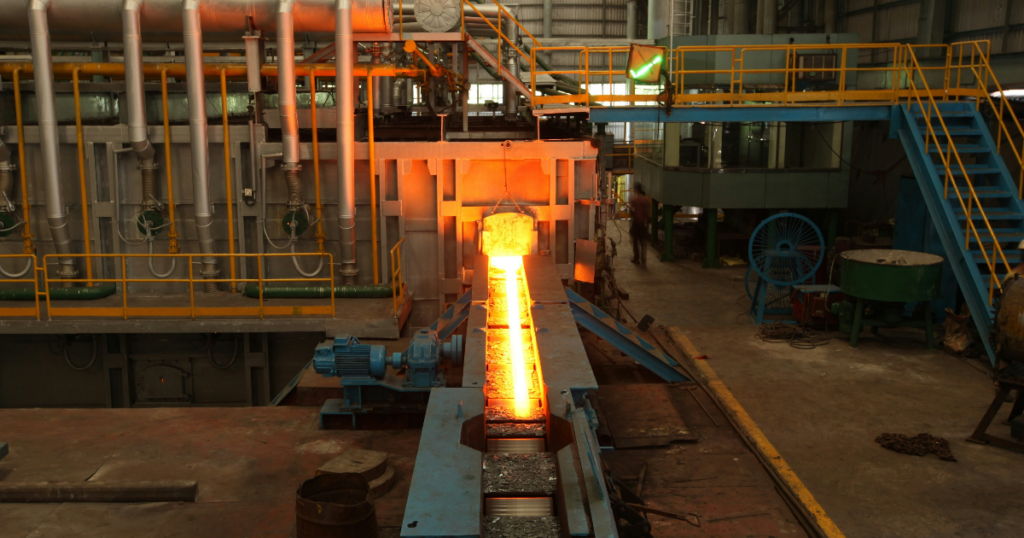
- Steel mills melt to spec. Integrated mills melt and refine the alloy to ASTM A335’s tight chemistry window, then cast it into billets verified by mill test reports.
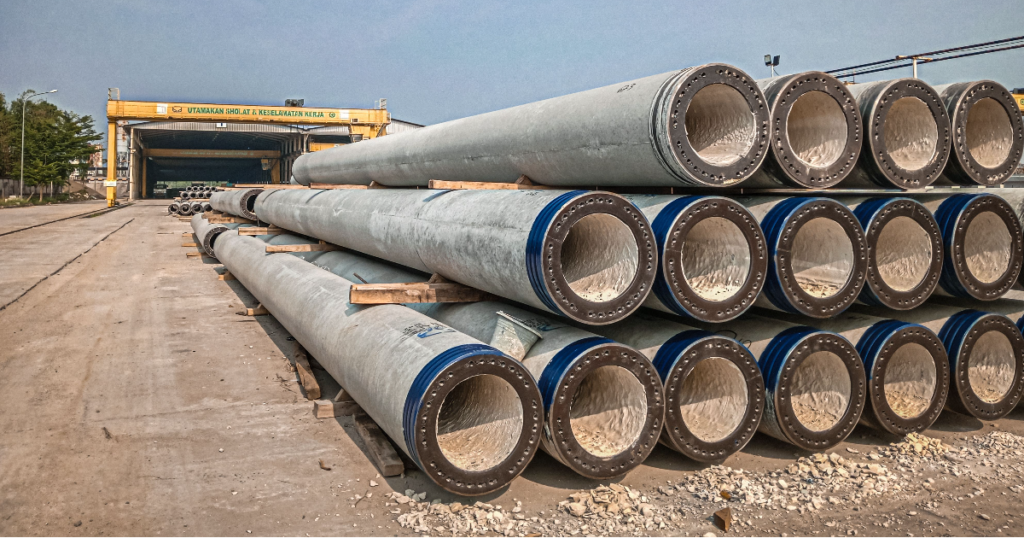
- Pipe mills roll or extrude it. Seamless mills use mandrel or plug-mill rolling for standard sizes. Heavy-wall, large-diameter P91 often needs hot extrusion presses generating forces that can exceed 500 million newtons.
- Forge shops make the fittings. Elbows, tees, and flanges are separately forged to ASTM A182 Grade F91 and heat-treated to match the pipe’s properties.
- The pipe is tested. Every heat gets mechanical testing including hydrostatic testing and non-destructive examination before release, per ASTM A335.
You Might Also Like: What is P91 welding?
Why the Mill’s Job Is Only Half the Story
ASTM A335 requires the mill to normalize and temper every P91 pipe before shipment.
The moment a fabricator cuts and welds that pipe into a refinery unit, the alloy needs the same metallurgical discipline all over again.
- Preheat: joints need a minimum of roughly 400°F (200°C) before an arc ever strikes, using electric preheat rather than an open flame for even, controlled coverage.
- Interpass control: welders hold the joint below about 600°F (315°C) between passes, checked constantly with pyrometers or thermocouples.
- Post weld heat treatment: the finished joint is heated to roughly 1,375-1,425°F (745-775°C) and soaked for about one hour per inch of wall thickness. See our full guide on post weld heat treatment (PWHT).
Check Out: Industrial Heat Treatment Service: Cost, Process & Value for Your Project
How to Vet Whoever Makes and Installs Your P91
Since so many hands touch P91 before it’s in service, the real question isn’t only who makes P91 pipe for refineries but who’s accountable once it’s welded in. This accountability may sometimes sit with the field heat treatment provider, not the mill.
- Ask for welding procedure qualifications (WPS/PQR) specific to the P91 material group, not generic alloy-steel paperwork, like ASME 31.1 and ASME B31.3 for process piping.
- Look for documented digital temperature monitoring, with full hold-time and ramp-rate records for every joint.
- Confirm the crew has dedicated P91 heat treatment project leadership, not a generalist technician learning the material on your job.
As AxiomHT’s CEO Gerry McWeeney puts it: “P91 does not forgive or forget bad heat treatment.” It’s a fitting summary of everything in this guide. The mills and forges do their part, but the field crew’s discipline is what actually determines how well the P91 performs.
Frequently Asked Questions (FAQs)